
Urethral Stricture or Enlarged Prostate: How Are They Different?

Brahma Ayurved
Ayurvedic Urology Center
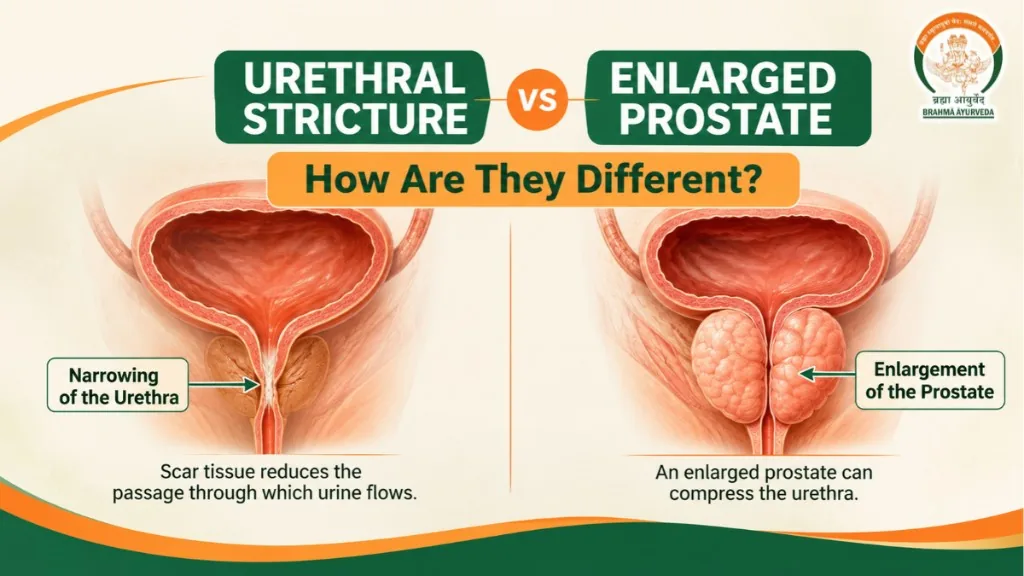
Experiencing a weak urine stream, difficulty starting urination or frequent trips to the toilet?
These symptoms can be frustrating, especially when you are unsure about their cause.
Two possible conditions associated with urinary difficulties in men are urethral stricture and enlarged prostate. Although both can affect urine flow, they are different conditions and require proper medical evaluation.
Understanding the difference between them is important for identifying the underlying problem and exploring suitable treatment options.
What Is Urethral Stricture?
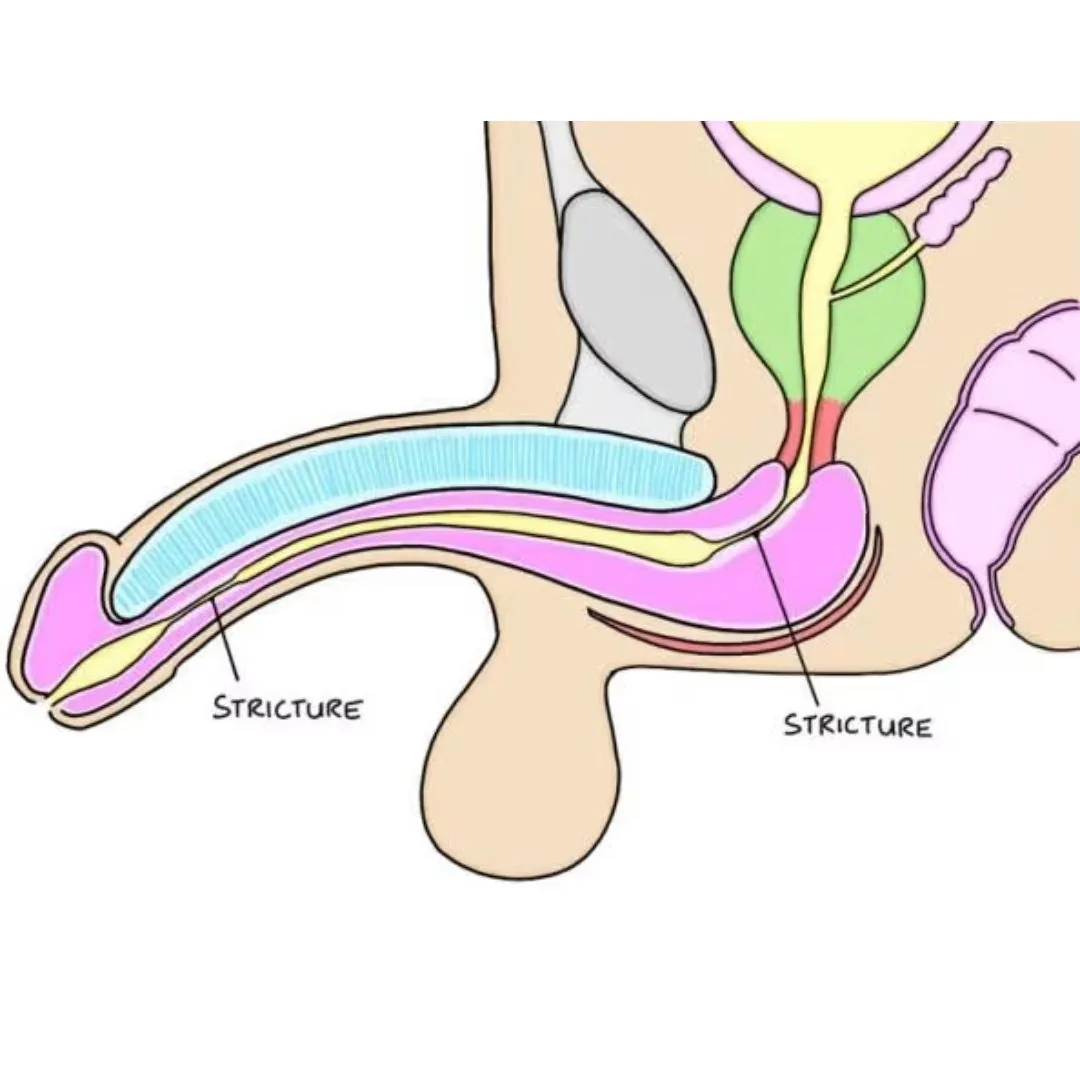
A urethral stricture occurs when scar tissue narrows the urethra, the tube that carries urine from the bladder out of the body.
This narrowing restricts the normal flow of urine and may cause symptoms such as:
- Weak or slow urine stream
- Difficulty starting urination
- Straining while passing urine
- Spraying or splitting of the urine stream
- Incomplete bladder emptying
- Recurrent urinary tract infections
Urethral stricture may develop due to previous injury, infections, inflammation, catheterisation or certain urinary procedures. Sometimes, the cause remains unknown.
What Is an Enlarged Prostate?
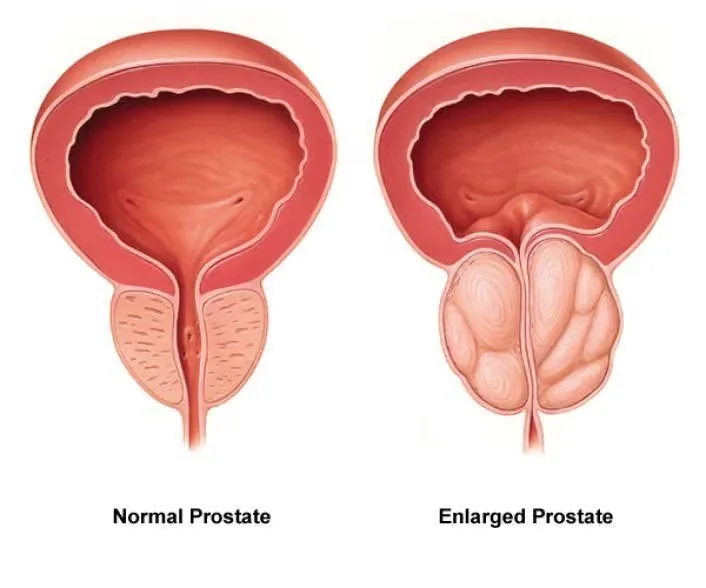
An enlarged prostate, medically known as benign prostatic hyperplasia (BPH), occurs when the prostate gland increases in size.
The prostate surrounds the urethra just below the bladder. When it becomes enlarged, it can press against the urethra and restrict urine flow.
Common symptoms include:
- Frequent urination, especially at night
- Difficulty starting urination
- Weak urine stream
- Sudden urgency to urinate
- Dribbling after urination
- Feeling that the bladder has not emptied completely
BPH becomes more common with increasing age, particularly in older men.
Urethral Stricture vs Enlarged Prostate: Key Differences
| Urethral Stricture | Enlarged Prostate |
|---|---|
| Caused by scar tissue narrowing the urethra | Caused by enlargement of the prostate gland |
| Can occur at different ages | More common in older men |
| May be associated with previous injury or urinary procedures | Commonly associated with age-related prostate changes |
| Narrows the urethral passage directly | Compresses the urethra through the enlarged prostate |
Although the symptoms can overlap, the underlying causes are different.
How Can These Conditions Be Diagnosed?
Symptoms alone cannot confirm whether someone has urethral stricture or an enlarged prostate.
A doctor may recommend investigations such as uroflowmetry, ultrasound, post-void residual assessment, RUG or cystoscopy, depending on the patient's condition.
A proper evaluation helps identify the cause and determine the appropriate care.
Understanding Ayurvedic Urology

At Brahma Ayurveda, Nadiad, Gujarat, specialised Ayurvedic Urology care focuses on conditions such as urethral stricture. Uttarbasti is an important part of the centre's treatment approach.
However, the suitability of Ayurvedic treatment depends on individual clinical assessment. Not every urinary problem is a urethral stricture, and an accurate diagnosis is essential before considering treatment.
Learn more about Brahma Ayurveda or explore our consultation options.
Frequently Asked Questions
1. Can an enlarged prostate and urethral stricture cause similar symptoms?
Yes. Both can cause weak urine flow, difficulty urinating and incomplete bladder emptying.
2. Is urethral stricture the same as an enlarged prostate?
No. Urethral stricture involves scar tissue narrowing the urethra, whereas an enlarged prostate occurs when the prostate gland increases in size.
3. Can young men develop urethral stricture?
Yes. Urethral stricture can affect younger men as well as older adults.
Final Thoughts
A weak urine stream does not always mean an enlarged prostate. It may also indicate urethral stricture or another urinary condition.
Rather than guessing the cause, seek proper medical advice. Understanding the difference is the first step towards making informed decisions about your urinary health.
For more information, visit www.cureurethralstricture.com.